If you are searching for unsafe building redevelopment in Ahmedabad, it likely means your residential building or society has been declared structurally unsafe, is facing repeated repair issues, or poses serious safety risks to occupants.
Across Ahmedabad, many buildings constructed 25–40 years ago are now showing signs of structural deterioration—cracks in RCC members, water seepage, corrosion of steel, and weakening foundations. Temporary repairs often provide short-term relief but do not eliminate long-term risk.
Unsafe building redevelopment is not just a real estate decision—it is a safety-critical and legally sensitive process. This page explains the step-by-step process, legal considerations, feasibility, and how societies can redevelop unsafe buildings safely, transparently, and without falling into common traps.

An unsafe building is a structure that no longer meets minimum safety standards due to:
Once a building is declared unsafe, redevelopment becomes a necessity, not an option.
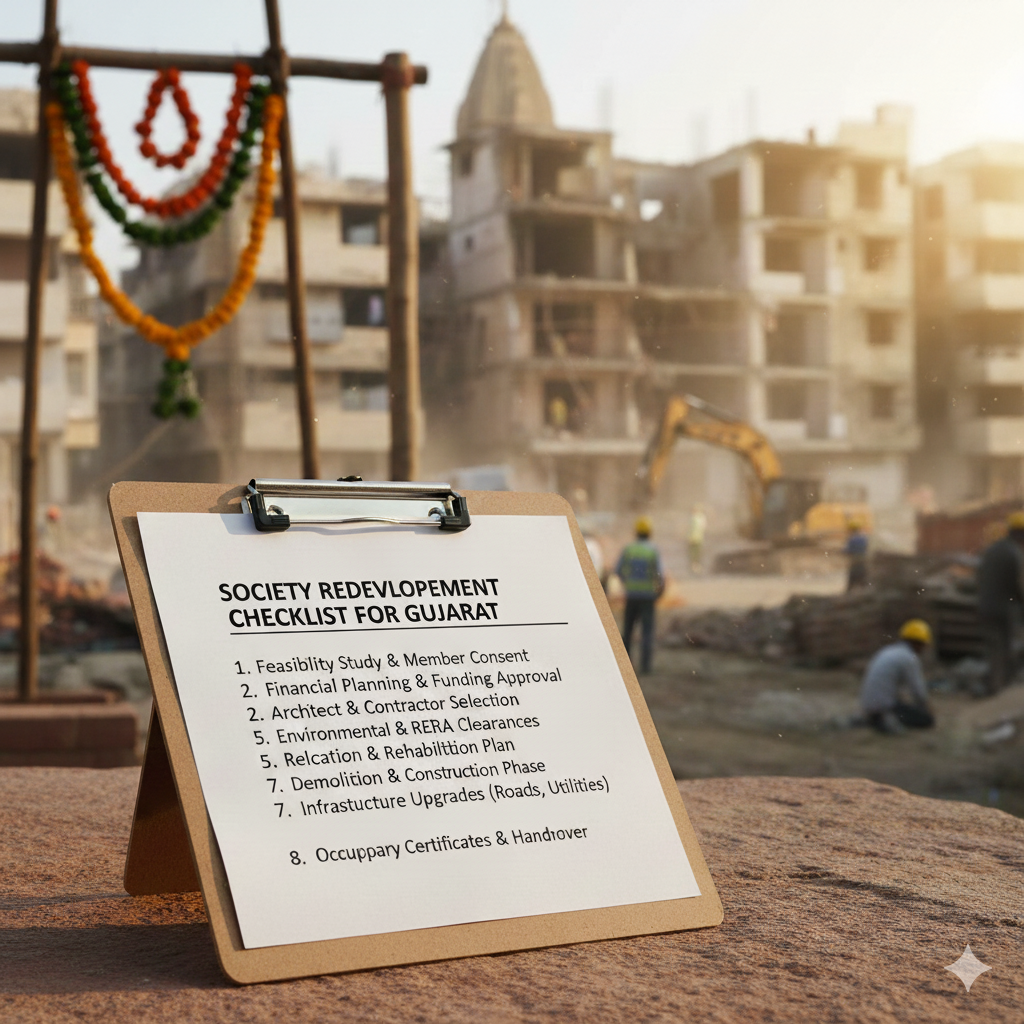
The process begins with a detailed structural audit conducted by a licensed structural engineer to assess the safety condition of the building.
Critical risks are identified and the structure is classified as unsafe or repairable, forming the foundation for redevelopment planning.
Society members are clearly informed about safety risks, legal implications, redevelopment necessity, and possible timelines involved in unsafe building redevelopment.
Transparent communication helps avoid panic, confusion, and misinformation.
A professional feasibility study evaluates financial viability, available FSI/TDR, and realistic redevelopment benefits for society members.
This step prevents false promises and ensures decisions are based on facts.
An independent redevelopment consultant is appointed to represent only society interests and coordinate technical, legal, and financial inputs.
This ensures transparency and protects societies from exploitation.
Builders are evaluated based on financial strength, experience in unsafe building redevelopment, technical capability, and legal track record.
The lowest bid is not the safest option — credibility matters most.
This stage includes drafting development agreements, collecting member consent documents, and securing AMC/AUDA approvals.
Proper legal structuring avoids delays and long-term disputes.
Members vacate the premises through a safe, planned process with temporary accommodation or rent compensation as agreed.
Controlled demolition and construction are carried out as per approved plans.
Project timelines, construction quality, and compliance are monitored throughout execution to avoid deviations.
Final handover includes occupancy certification and possession to members.
Structurally unsafe buildings can lead to sudden failures, falling debris, fire hazards, and serious electrical or plumbing risks. These dangers increase with time and weather exposure.
Redevelopment permanently eliminates these risks by replacing weak structures with modern, safety-compliant construction.
Many societies spend lakhs every year on temporary repairs such as structural patchwork, waterproofing treatments, and plumbing replacements.
These expenses do not significantly extend the building’s life and often delay the inevitable need for redevelopment.
Occupants of unsafe buildings face insurance rejections, legal liability in case of accidents, and continuous pressure from AMC and local authorities.
Redevelopment ensures compliance with current regulations, safety norms, and legal requirements — reducing long-term risk for all members.
Independent guidance ensures decisions are made in the best interest of society members, without builder influence.
Potential legal, financial, and execution risks are identified early and managed professionally.
Builders are evaluated objectively based on capability, credibility, and redevelopment experience.
Strong agreements and compliance reduce disputes, delays, and future liabilities.
Every step is aligned with long-term safety, clarity, and value for society members.
Regular coordination between society members, consultants, and developers ensures transparency, alignment, and smoother execution at every stage.
Clear answers to common questions about housing society redevelopment in Ahmedabad, helping societies and owners make informed decisions.
If an unsafe building is not redeveloped, authorities may restrict or prohibit occupancy, issue notices, and take legal action to prevent accidents. Continued occupation of such buildings can expose residents and society office bearers to serious legal and safety risks.
In many cases, yes. When a building is declared unsafe by structural audit or municipal authorities, redevelopment becomes necessary to address safety concerns and comply with AMC regulations.
Yes, small buildings can also undergo unsafe building redevelopment, subject to feasibility, FSI availability, and statutory approvals. A professional feasibility study helps determine the most suitable redevelopment approach.
Unsafe building redevelopment typically takes between 24 to 36 months, depending on approval timelines, project size, demolition complexity, and construction execution.
Answer a few simple questions to check whether your society may be suitable for redevelopment in Ahmedabad.